

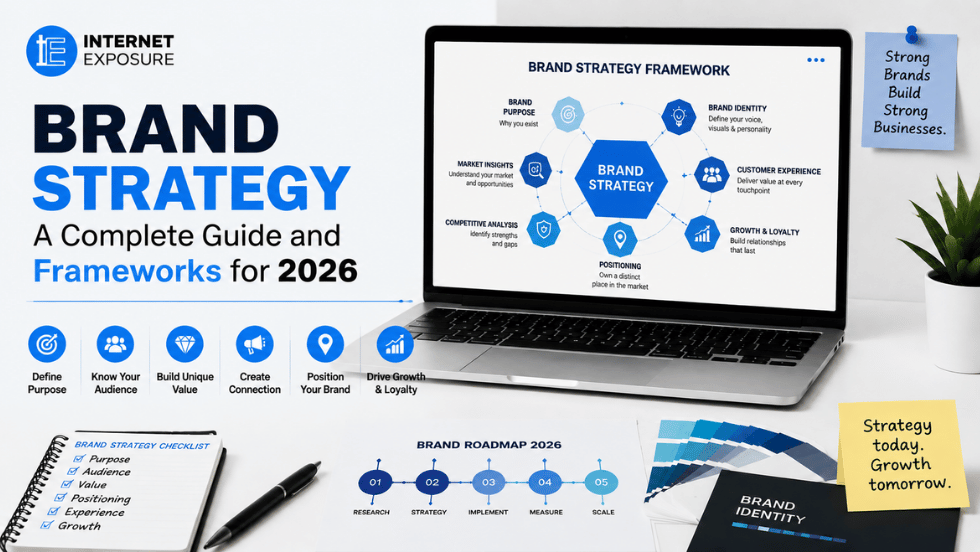
A strong brand is no longer built only through logos, colours, or advertising campaigns. In 2026, meaningful experiences, clear positioning, customer trust, and consistent communication across various platforms are the keys to creating successful brands. An effective brand strategy enables companies to establish themselves, reach out to their audience and create a lasting presence in a competitive market.
As consumer demands evolve, search experiences are becoming AI-driven, and digital competition is growing, Digital Marketing and SEO companies require a systematic way of branding. An integrated brand strategy framework offers the guide to establish a memorable identity, build customer relationships, and facilitate sustainable growth.
What Is Brand Strategy and Why Does It Matter in 2026?
A brand strategy is a long-term plan that defines how a business will position itself, convey its worth and establish relationships with customers. It dwells on the intention, personality, positioning and the general perception of a brand.
Unlike a marketing campaign that promotes specific products or services, brand strategy creates the foundation behind every customer interaction.
It answers important questions such as:
- What is the meaning of the brand?
- Who are the intended audience?
- What is the difference between the brand?
- Why would the customers prefer this brand to others?
Brand strategy has gained significance in 2026 due to increased options to customers compared to the past. Consumers desire brands to be authentic, transparent, and personalised. When companies articulate their values and have a consistent experience, they are more likely to gain customer loyalty.
Key Elements of a Successful Brand Strategy Framework
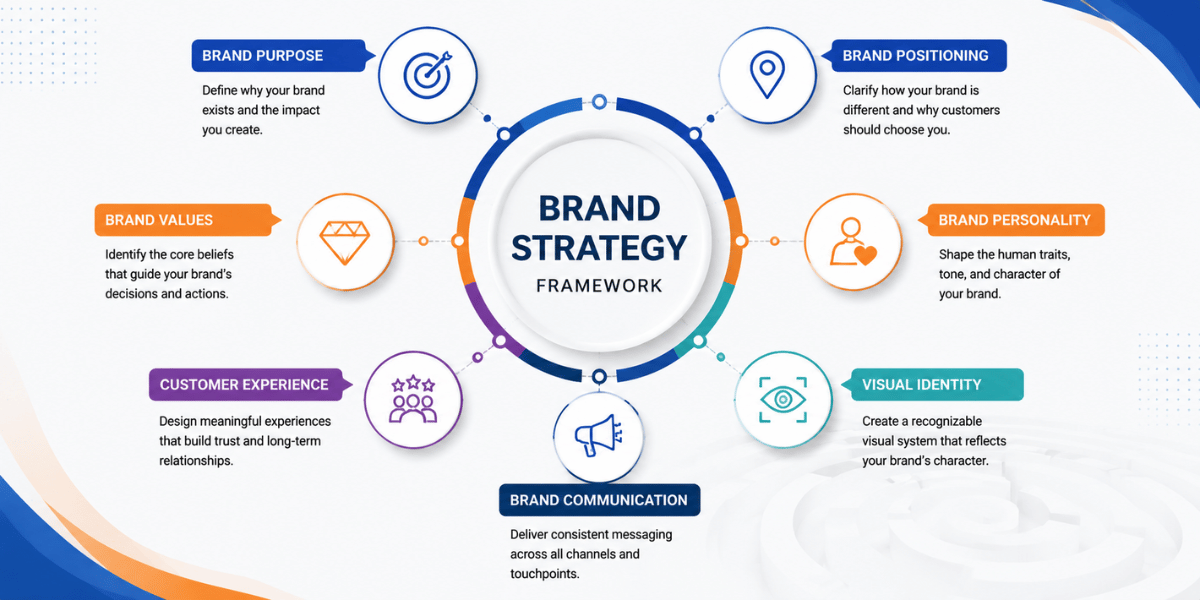
An effective brand strategy framework has a number of significant components that collaborate to build a brand identity and positioning.
The initial one is brand purpose. This is what determines why a company is in existence other than to make profits. A clear purpose will assist customers to know the values of the business and will establish an emotional bond.
The second one is brand positioning. Positioning defines the perception of a brand relative to the competitors. It emphasizes the special advantages, experience and worth that a company offers to the customers.
Brand personality is another key factor. This attributes human attributes to a brand, which affects its tone, message, and customer relationships. The personality of any brand can be professional, innovative, friendly, or premium but must be the same in all channels.
Visual identity, messaging guidelines, customer experience, and brand communication strategies are also a part of a complete framework. A combination of these elements forms a single brand image.
Understanding Your Audience Through Research and Insights
The best place to start with brand strategy is to know the people that a business wants to reach. Audience research assists the brands in finding out the needs, preferences, challenges, and buying behaviours of the customers.
By 2026, companies will be able to leverage cutting-edge technologies like AI analytics, customer feedback systems, and search behaviour data to understand the audience better. These lessons enable businesses to develop more pertinent messages and experiences.
A good research process must contain:
- Determining target customer groups
- Analysing customer expectations
- Understanding market trends
- Studying competitor positioning
- Survey of customer reviews and feedback.
By knowing their audience, the brands can develop more personal and valuable strategies. This enhances customer interaction and assists in creating better relations in the long run.
Modern Brand Positioning Strategies for Competitive Markets
One of the most significant aspects of creating a successful brand strategy is brand positioning. It determines the position that a brand desires to be in the minds of customers.
An effective positioning strategy effectively conveys the brand value proposition. The brands should work on what makes them special and why their audience should be interested instead of attempting to attract everybody.
The following are some of the successful positioning strategies to be used in 2026:
Customer-oriented positioning: Emphasizing on solutions that are direct responses to customer issues.
Positioning based on value: Demonstrating the value and outcomes that customers get.
Positioning based on expertise: Authority through knowledge, experience and credibility.
Purpose-driven positioning: Relating the brand to valuable values and social contribution.
Strong positioning helps businesses stand out while creating a clear reason for customers to choose them.
The Role of Digital Experiences and AI in Brand Strategy
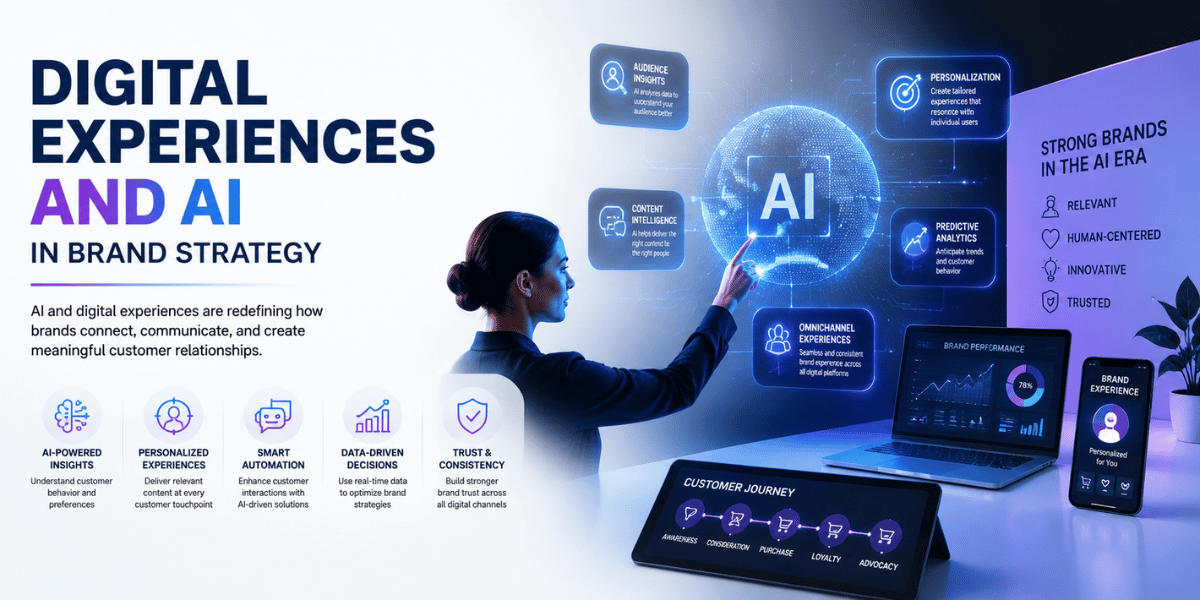
Technology is changing the way the brands interact with the customers. The brand strategy in 2026 should take into account digital experiences, artificial intelligence, and customer journey changes.
The use of AI to search, make personalised suggestions, and interact with customers automatically is transforming the way individuals find and interact with brands. Companies should make sure that their brand data is correct, consistent, and comprehensible on the Internet.
A contemporary brand strategy must comprise:
- Optimised online presence
- Cohesive channel brand messaging
- Personalised customer experiences
- Strong content marketing
- Reviews and expertise building of trust.
Human creativity and technology used together can produce more interactive experiences and help the brands sustain closer relationships with their audiences.
Measuring Brand Strategy Success and Improving Over Time
A brand strategy cannot be left the same. Effective firms keep on gauging performance and change their strategy depending on customer behaviour and market dynamics.
Significant brand performance measures are:
- Brand awareness
- Customer engagement
- Website traffic
- SEO
- Customer loyalty
- Conversion rates
- Online reputation.
Frequent analysis assists businesses to know what is performing and where they need to improve. Through monitoring these insights, brands are able to narrow down on their message, enhance customer experiences, and stay relevant.
Building a Future-Ready Brand Strategy for 2026
An effective brand plan in 2026 cannot be achieved by a web design or advertisement. It needs a purpose, powerful positioning, understanding of customers and uniformity of experiences in all interactions.
Companies that invest in strategic branding are able to develop a stronger recognition, gain customer confidence and develop sustainable competitive advantages. Through established models, adoption of digital innovation, and prioritizing true customer value, brands can be ready to succeed in the long term in a changing market.
The entire brand strategy does not only entail the appearance of a company but also the experience that a customer undergoes, what they recall and the reason why they want to remain connected.